
Buddhist learning for everyday life.
Reflections
Longer conversations about Buddhist foundations and the lives we actually lead.
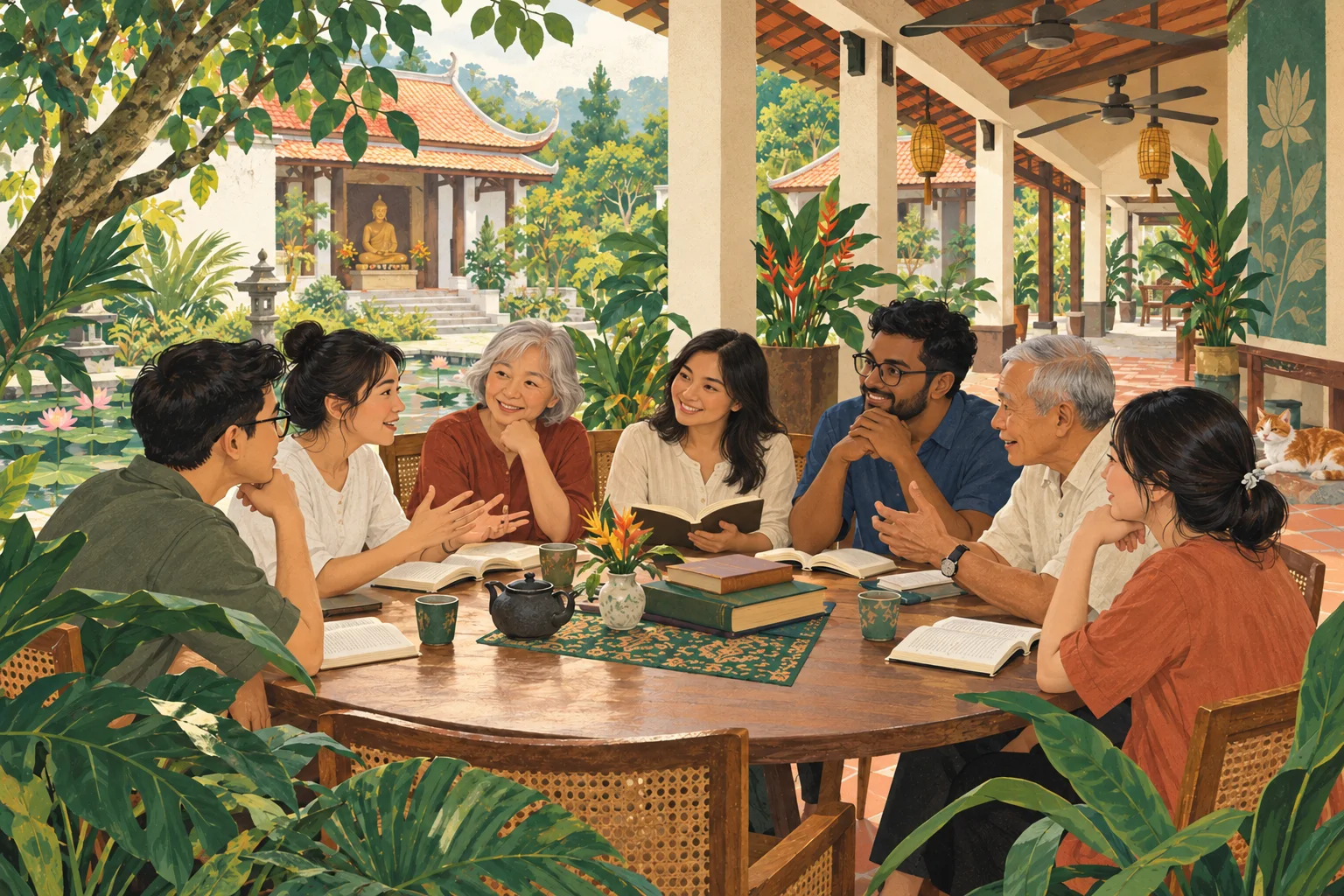
Belonging without pretending to know everything
Entering a temple or study group can be unfamiliar even when Buddhism is part of your family background. Not knowing a word or custom does not make you an unsuitable learner.
Buddhism is more than a productivity technique
A quiet mind can sound attractive when the inbox is full. But if Buddhist practice becomes only a way to work harder without questioning the work, something important has been lost.
Life is going fine. Is there still something to practise?
You have finished an assignment. A meal with friends turns out well. Or it is an ordinary afternoon with nothing especially wrong. There is no need to manufacture a problem before exploring the Dhamma.
Generosity without the performance
A gift can be useful and still come with complicated motives. We may care about a cause and also hope to be thanked. Noticing that mixture is a starting point for honesty, not a reason to give up giving.
I know the chanting, but I do not understand it
Perhaps you recognise a chant before you know what it says. You know when palms come together, but not where the words come from. That is a reasonable place to begin.
Intention, impact and making things right
“I meant well” may be true. It may also be incomplete. A message can be intended as helpful and still embarrass someone in front of a group.
Kindness can include a clear no
Being caring does not require agreeing to every request. A boundary can protect the conditions that make care possible.
Practising on good days, bad days and days in between
It is easy to imagine practice as something we need only when life goes wrong. Yet a celebration, an uneventful afternoon and a difficult conversation each offer something to learn.
Right speech in the group chat: honesty, timing and care
A group chat makes speaking easy. It does not always make listening easy. A correction, joke or screenshot can reach people far beyond the conversation we imagined.
Study, work and the question of right livelihood
A livelihood supports real needs. Buddhist reflection does not ask us to ignore rent, food or family responsibilities. It asks us to consider how meeting those needs affects other people.
The Middle Way is not just meeting everything halfway
Not every problem is solved by splitting the difference. The Middle Way asks us to look more carefully at the path we are choosing.
The second arrow is not a reason to blame yourself
When you are already hurting, being told that your suffering is your own fault adds a burden. The image of two arrows should not become another weapon.
When the plan changes, what remains possible?
The rain starts before an outdoor gathering. A train is delayed. A project takes longer than expected. A changed plan can bring both practical inconvenience and the extra demand that reality should have…

Where Do I Fit? A Young Malaysian’s Guide to Buddhist Traditions
No matches. Try fewer words or choose another filter.