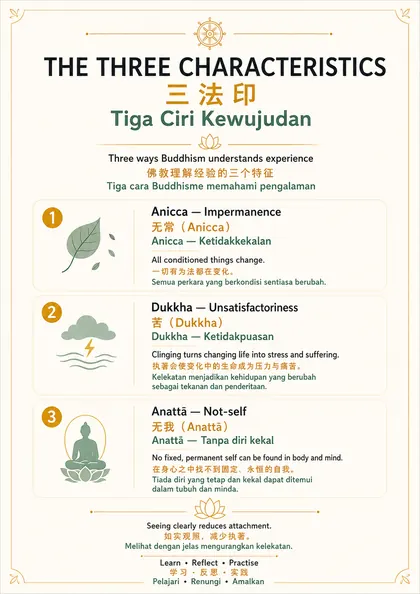
When the plan changes, what remains possible?
The rain starts before an outdoor gathering. A train is delayed. A project takes longer than expected. A changed plan can bring both practical inconvenience and the extra demand that reality should have…
Change & difficult moments · 2 min read
When you are already hurting, being told that your suffering is your own fault adds a burden. The image of two arrows should not become another weapon.
The Sallatha Sutta discusses how people experience pleasant, painful and neutral feelings. Its example concerns bodily pain and the additional mental distress associated with resistance (SN 36.6). The contrast describes a developed capacity within Buddhist training. It is not a diagnostic test for grief, trauma or mental illness, nor a demand that a beginner immediately stop feeling distressed.
A contemporary application might distinguish an uncomfortable event from the accusations we add: “This is difficult” and “I am worthless because it is difficult” are different statements. That distinction can sometimes open a choice. It does not establish that every reaction is voluntary or that every problem is inside the mind.
If someone is injured, attend to the injury. If a situation is unsafe, help the person reach safety. Practical support, medical treatment and time are not failures of spiritual practice. A friend who is grieving may need company or help with a meal, not a lecture about attachment.
For yourself, begin with a plain description: this hurts; I am frightened; I need assistance. If another harsh judgement appears, see whether it can be held more lightly. You do not have to force a calm state or prove that you are practising correctly. Even noticing self-blame without arguing with it can be enough for now.
Choose an ordinary frustration rather than your most painful experience. Separate what happened from one interpretation you have added. Check whether the interpretation is fair and useful. Then decide on a concrete next step: clarify the arrangement, take a break or ask for help. If inward attention makes distress worse, stop and turn towards support or your surroundings.
This is a reflective exercise, not a clinical intervention. Research on structured mindfulness programmes cannot be transferred automatically to a paragraph on a website. The invitation is to reduce avoidable harshness, including harshness towards the person who cannot yet put it down.
The rain starts before an outdoor gathering. A train is delayed. A project takes longer than expected. A changed plan can bring both practical inconvenience and the extra demand that reality should have…