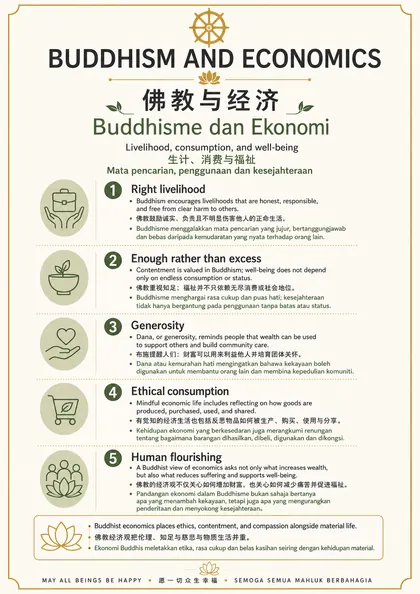
A livelihood supports real needs. Buddhist reflection does not ask us to ignore rent, food or family responsibilities. It asks us to consider how meeting those needs affects other people.
Look beyond the job title
An impressive title does not settle whether daily conduct is ethical. Consider honesty in reporting, treatment of colleagues and the foreseeable harm of what is produced or sold. The same questions apply while studying: whose work is being credited, what claims are supported and what shortcuts shift a burden onto someone else?
Work within imperfect conditions
Few people can redesign a workplace overnight. Begin with the choices you can actually make. Correct an inaccurate number. Ask before using another person’s material. Refuse to fabricate a result. If a serious problem exceeds your authority, seek an appropriate reporting or support route rather than imagining you must solve it alone.
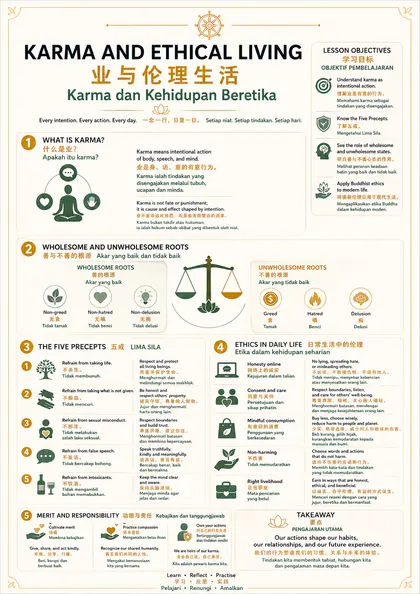
These examples apply the path’s concern with ethical action and livelihood; they are not individual career or legal advice. Circumstances and obligations differ.
Let enough be a serious question
Ambition can motivate learning and service. It can also become an endless comparison in which no achievement lasts. Ask what a worthwhile working life needs besides recognition: honesty, reasonable rest, trustworthy relationships and the ability to live with the consequences of your work.
One useful reflection after a task is: what did I contribute, what did it cost others and what should I do differently? That is a more complete measure than output alone.